
 Italiano
 Español
 Français
 Deutsch
 Nederlands
 Português do Brasil
 Pусский
 日本語
日本語 简体中文
简体中文 한국어
한국어

The GEM Museum
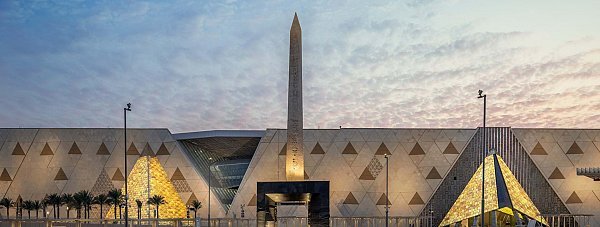
The Hanging Obelisk
Suspended dramatically above a vast 30,000 square metre plaza at the museum's main entrance, the Hanging Obelisk is the very first artefact to greet visitors as they arrive at the Grand Egyptian Museum. It is the first elevated obelisk in Egypt, transforming a traditional monument into a bold architectural statement that can be seen from below and from afar. Its presence sets the tone for the entire visit, signalling that the museum is not only a repository of the past, but also a place of innovation and contemporary design.
The obelisk itself, dedicated to King Ramses II, has been carefully reassembled and raised on a specially designed pedestal, the sides of which are decorated with the word “Egypt” written in several languages. This combination of ancient stone and modern engineering symbolises the way in which the Grand Egyptian Museum links different eras and cultures. Visitors passing beneath the monument literally step into the shadow of Egypt's royal heritage, moving from the open piazza into the museum's internal story of civilisation.
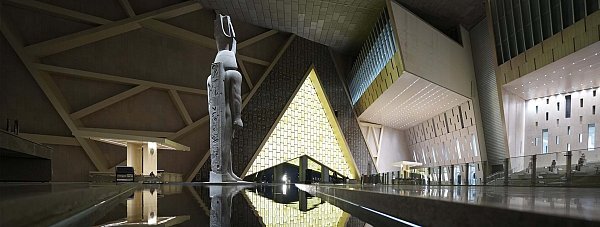
The Grand Hall
The Great Hall acts as a monumental threshold between the outside world and the galleries of the museum. Dominated by colossal royal statues, including the imposing red granite colossus of Ramses II, it immediately immerses the visitor in the scale and ambition of ancient Egyptian art. Bathed in natural light and framed by sweeping architectural lines, this vast space showcases kings and queens carved on a heroic scale, standing as guardians of the stories that unfold deeper within the museum.
These towering figures were more than symbols of power: in ancient belief, royal colossi could act as intermediaries between humanity and the gods. By bringing them together in the Great Hall, the museum recreates the sense of awe these statues would have inspired in ancient temple courtyards and city squares. Visitors starting their tour here are invited to consider how the pharaohs shaped political, religious and artistic life, before exploring how ordinary people lived under their rule in the surrounding galleries.
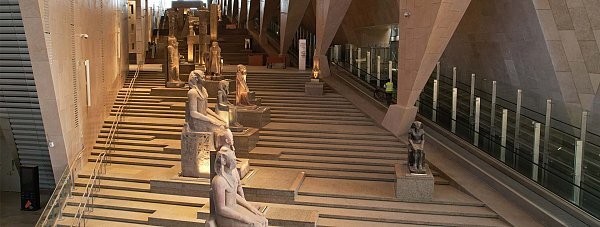
The Grand Stairs
Rising from the Great Hall to the upper galleries, the Grand Staircase is one of the museum's most iconic interior spaces. This monumental staircase is lined with carefully selected statues and architectural fragments, many of them large-scale royal and divine images from different periods of Egyptian history. As visitors ascend, they pass kings, queens and deities whose forms once adorned temples and sacred sites along the Nile, transforming a functional route into a powerful sculptural procession.
The design of the Grand Staircase transforms the act of climbing from one level to another into a narrative journey. Each landing offers new perspectives on the artefacts and architecture of the museum, gradually revealing the thematic galleries above. The sequence of statues evokes ideas of kingship, power and eternity, encouraging visitors to reflect on how royal authority was expressed and remembered throughout more than three millennia of Egyptian civilisation.
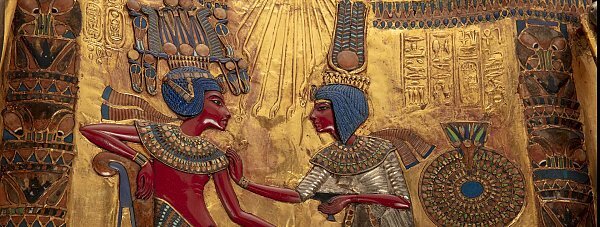
Tutankhamun Galleries
The Tutankhamun Galleries invite visitors to relive the remarkable archaeological discovery of 1922 when Howard Carter and his team, funded by Lord Carnarvon, uncovered the almost intact tomb of the young king in the Valley of the Kings. For the first time, the complete collection of objects from the tomb is displayed together in one museum, using the latest conservation and display techniques. The galleries offer a rare opportunity to see not only the most famous treasures, but also many previously unseen objects that reveal the daily and ceremonial life of the “Golden Pharaoh”
Rather than presenting the objects as isolated masterpieces, the Tutankhamun galleries are organised as a journey through the king's world: his royal upbringing, his court, his religious environment, his burial and his beliefs about the afterlife. Visitors follow a carefully choreographed narrative that explains how each group of artefacts functioned in context - from jewellery and furniture to chariots and ritual equipment. This immersive approach transforms the story of Tutankhamun from a single spectacular find into a window on an entire moment in Egyptian history.
Main Galleries
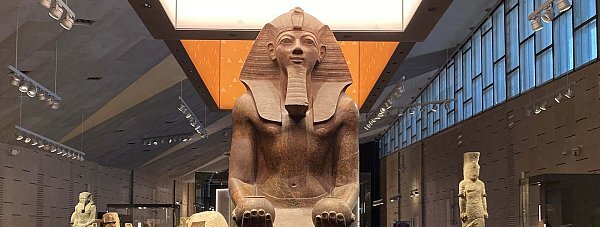
The main galleries of the Grand Egyptian Museum, often grouped under themes such as “Ancient Lives”, invite visitors to explore the diversity of ancient Egyptian society through everyday objects, luxury items, religious artefacts and monumental pieces. Organised both chronologically and thematically, the galleries range from prehistoric communities along the Nile to the Roman period, illustrating how technologies, artistic styles and belief systems changed over thousands of years.
Within these spaces, visitors encounter stories of kings and officials, but also of craftsmen, farmers, families and worshippers who shaped Egypt's culture through their daily activities. Exhibits highlight themes such as writing, trade, domestic life, ritual and burial practices, showing how objects were created, used and reused over generations. By focusing on the people behind the artefacts, the main galleries encourage a more intimate understanding of ancient Egypt—not just as a land of pyramids and pharaohs, but as a complex society made up of many different “ancient lives.”
Khufu's Boat Museum
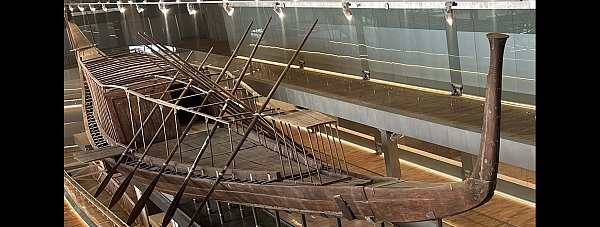
The two famous solar boats were discovered in 1954 next to the Great Pyramid of King Khufu at Giza, one next to its sister, disassembled and packed into deep pits lined with limestone along the pyramid complex. The first, a colossal wooden ship over 42 metres long, took more than a decade to piece back together. After much debate about its new home, a massive conservation and engineering project began in 2019, with plans to move the boat in its entirety to the Grand Egyptian Museum.
In August 2021, in just three days, the fully assembled boat was transported eight kilometres by a specially designed smart vehicle, and then lifted into its new position by a giant crane, ensuring that this incredible organic artefact will remain intact in the museum, while topping the world's visitor list. Work on the second boat began in 2014. After careful removal and conservation of its wooden parts, it is now being moved to the Grand Egyptian Museum, where it will be conserved and reconstructed as an active, living display for the public. Both will be displayed in a separate building on the GEM campus designed for such phenomenal artefacts: the world's oldest surviving wooden vessels and perhaps organic objects.
What exactly was the original function or even identity of these boats is still a matter of debate among scholars; most likely they were intended to carry the body of the king or perhaps “solar boats” for his journey through the eternities with the sun god.
Accessibility of the GEM
Accessibility at the Global Education Museum The Grand Egyptian Museum aims to transform the museum experience into a happy human interaction in a cultural environment where no one feels excluded or looked down upon. In order to achieve this goal, the Grand Egyptian Museum ensures that amenities are available for all visitors.
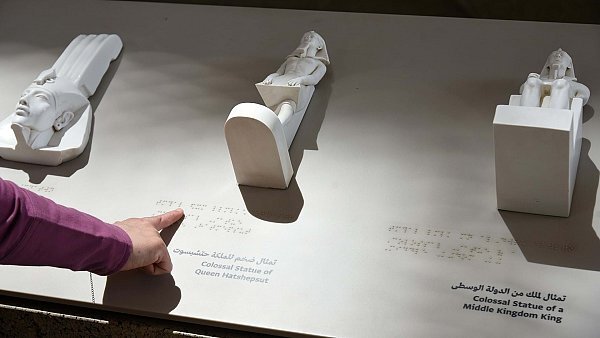
These amenities include, but are not limited to, free admission for people with disabilities, the purchase of golf carts to assist with mobility within the museum, wheelchairs and special lifts with hearing assistance, accessible toilets, and seats where tired visitors can take a break and just sit.
We are committed to improving the experience for disabled visitors by providing a tangible model with Braille. Please let us know if you have any special needs or require any assistance.