
 Italiano
 Español
 Français
 Deutsch
 Nederlands
 Português do Brasil
 Pусский
 日本語
日本語 简体中文
简体中文 한국어
한국어

Gardens at GEM
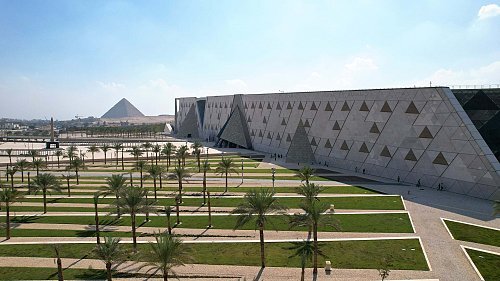
The eye sees the Pyramids of Giza, the mind tries to fathom the great architecture of the Grand Egyptian Museum. The GEM Gardens become a green pathway that organically connects the museum and its surroundings. They are deliberately planned as part of another aspect of the outdoor spaces, an additional experience for resting between exhibitions, while basking under the open sky and getting a lesson about ancient Egypt through nature, art and selected plants.
Paths that attract walking terraces and seats in the shade help visitors to slow down; to think beyond the indoor experience — to see the place as a living cultural park, not just a building. Each garden has its own character and use. The Palm Garden is a vibrant social place, with spaces for families to enjoy and places for relaxed conversation; the Sculpture Garden provides an outdoor setting for major works of art and history; while the Temple Garden evokes ancient sacred scenes by combining parts of ancient temples with local Egyptian plants. Taken as a whole, these gardens demonstrate how the Grand Egyptian Museum blends heritage, architecture and landscape design into a unified place where culture happens both indoors and outdoors.
The Palm Garden
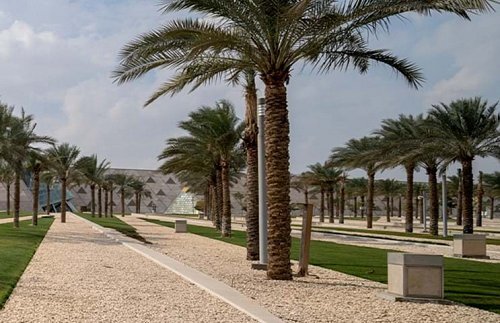
The Palm Garden is designed to be a welcoming oasis at the heart of the GEM outdoor experience. Divided into a series of distinct zones, it can host live performances on a small stage, playful activities in a dedicated children's area and relaxed browsing in a friendly mini-souk-style market. Tall palm trees, plenty of shade and open lawns make it the ideal place for families and groups to relax between museum visits, let children play safely and enjoy a casual bite to eat in the fresh air.
The Sculpture Garden
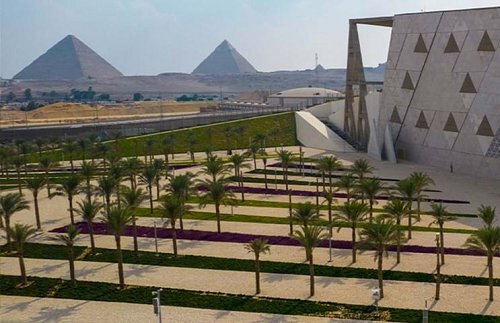
The Sculpture Garden transforms part of the museum grounds into a series of open galleries where art, archaeology and landscape come together. In this space, carefully placed statues and large objects are viewed in changing daylight, allowing visitors to engage with their form and texture in an experience that contrasts with that of an indoor gallery. Tree-lined paths and landscaped terraces lead the visitor through this open-air exhibition; framed views across the front of the museum and the Giza Plateau create a powerful conversation between new design and ancient heritage.
The Temple Garden
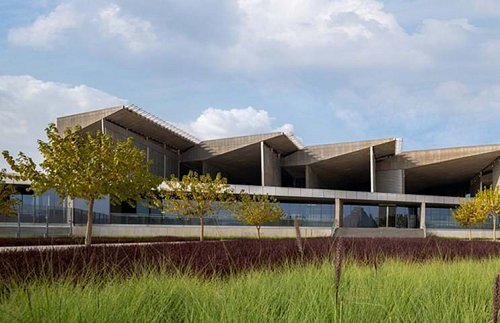
The Temple Garden is envisioned as an outdoor museum of sacred architecture and plants. Architectural elements and large objects from temples across Egypt are displayed among native trees and species closely associated with ancient Egyptian gardens, recalling the green sanctuaries that once surrounded historic shrines. As you move through the space, stone fragments, columns and carved blocks appear between cultivated beds and shaded seating areas, inviting quiet contemplation. With its blend of archaeology and living vegetation, the Temple Garden offers a serene counterpoint to the museum’s bustling interiors and reconnects visitors with the spiritual landscapes of ancient Egypt.