
 Italiano
 Español
 Français
 Deutsch
 Nederlands
 Português do Brasil
 Pусский
 日本語
日本語 简体中文
简体中文 한국어
한국어

Grand Egyptian Museum Receives the Inner Middle Shrine of King Tutankhamun
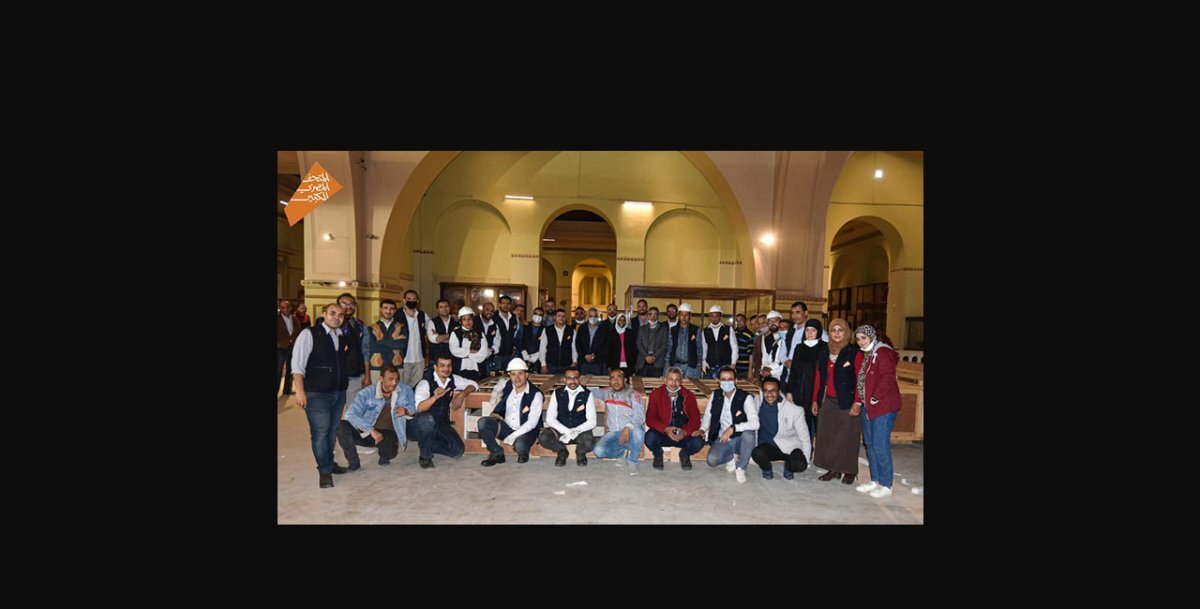 Grand Egyptian Museum Receives the Inner Middle Shrine of King Tutankhamun
A month after the fourth Shrine of Tutankhamun was installed in its display case in the galleries dedicated to the treasures of the Boy King, the third Shrine of Tutankhamun was received at the Grand Egyptian Museum.
The shrine was transferred from the Egyptian Museum in Cairo as part of the preparations for the opening of the museum. Major General Atef Moftah - General Supervisor of the Grand Egyptian Museum and its surroundings said that the transfer took place under very tight security measures by the Tourism, Antiquities and Relief Police under the supervision of conservators and museum curators.
General Atef revealed that there are four golden shrines of King Tutankhamun. The first of them is the fourth shrine. The third shrine is the second to reach the Grand Egyptian Museum (GEM). The other two shrines will be conserved for the time being before being transferred later.
Prof. Dr. Eltayeb Abbas, the Assistant Minister of Tourism and Antiquities for Archaeological Affairs at the Grand Egyptian Museum, announced that the third shrine will be restored at this museum. He explained that this particular shrine is made of gilded wood and was discovered among the king's treasures in his tomb in Luxor's West Bank in November 1922. He also explained that it will be transferred along with all other artefacts from this tomb from the Egyptian Museum in Cairo, where these items were previously displayed. Dr Abbas pointed out that the rest of the shrines will be removed to be displayed in the galleries designated for the king's treasure according to the exhibition plan.
He said that the gallery area covers about 7,200 square metres and is equipped with state-of-the-art museum display cases with integrated environmental controls, as well as lighting graphics and labels for each individual object. The shrine was moved according to the best scientific standards, said Professor Moamen Othman. He noted that the shrine was dismantled into ten pieces in the same way as the ancient Egyptians. Each piece was then individually wrapped, placed in an inner box and then placed in an outer box made of acid-free materials. Dr Aissa Zidan, General Director of Executive Affairs for Restoration and Transfer of Antiquities at the Grand Egyptian Museum, said that before moving them, a conservation study was carried out on site.
The conservation team prepared a detailed report on how well it is preserved, using advanced scientific methods of study. Through this scientific study, the locations of metal and wooden tongues were identified along with the slots of the shrine. He pointed out that this information was very useful to the team in developing a precise plan for the safe dismantling of the shrine. With the third shrine finally delivered to the museum, teams from the Grand Egyptian Museum and their colleagues from the Egyptian Museum in Cairo will reassemble it over the next few days before placing it in its display case where it will remain in the Tutankhamun galleries.