
 Italiano
 Español
 Français
 Deutsch
 Nederlands
 Português do Brasil
 Pусский
 日本語
日本語 简体中文
简体中文 한국어
한국어

The Grand Egyptian Museum Receives the Inner Shrine of Golden King
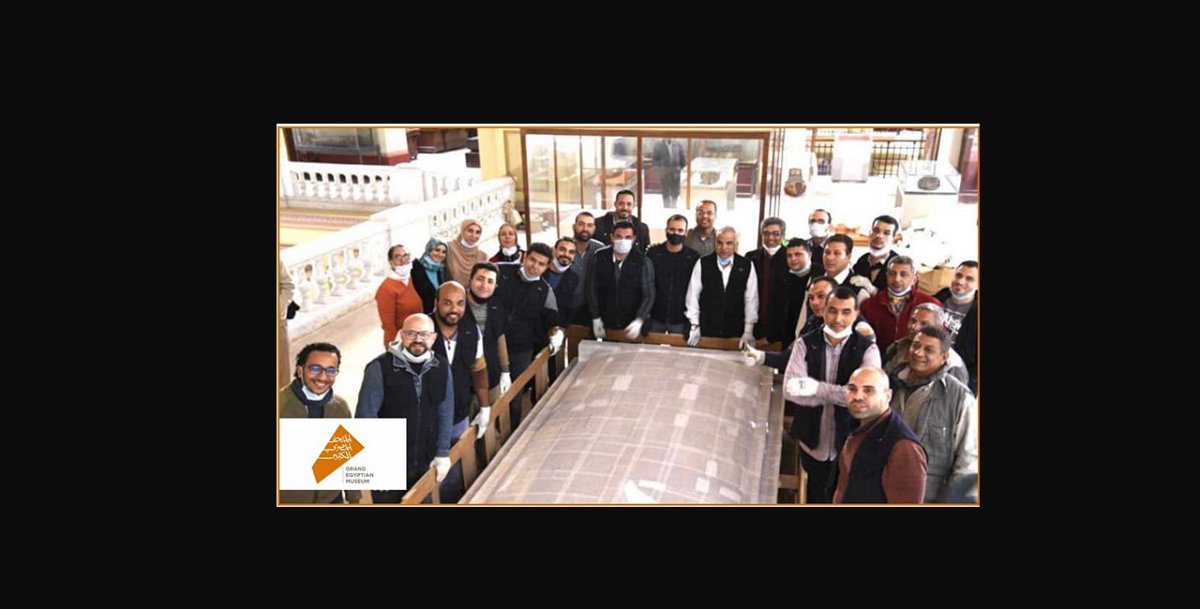 The Grand Egyptian Museum Receives the Inner Shrine of Golden Kin
The Grand Egyptian Museum (GEM) has received the Inner Shrine of King Tutankhamun from the Egyptian Museum in Cairo as part of its installation process to prepare for the opening of new galleries that will house the treasures of the Golden King.
Major General Atef Moftah, General Supervisor of the GEM project and its surroundings, said that the transfer took place under strict precautions within a security plan set by the Tourism and Antiquities Police in the presence of conservators and museum curators.
General Atef revealed that although it is the smallest shrine, it is considered one of the most important artefacts to be transferred from the King's treasures to the museum. Professor Dr El-Tayeb Abbas is the Assistant Minister of Tourism and Antiquities for Archaeological Affairs at the Grand Egyptian Museum. “Restoration work will be carried out on the inner shrine, which is made of gilded wood. This shrine has already been transferred in its entirety from the Egyptian Museum in Cairo, where it was previously housed and exhibited.”
The other three shrines will also be moved one by one as part of a plan to display them with the most advanced display techniques in dedicated halls for Tutankhamun, which will cover an area of approximately 7,500 square metres.
Professor Moamen Othman, director of museums at the Supreme Council of Antiquities, said that prior to the transfer, an examination was carried out on the tomb and a report was prepared on its state of conservation to ensure its safety during the transport. He added that his working team used Japanese tissue paper with appropriate materials for stiffening to ensure the safety of the shrine during transportation.
Dr Eissa Zidan, Director General of Executive Affairs for Restoration and Transfer of Antiquities at the Grand Egyptian Museum, said that technically the transfer of the Inner Shrine was done in accordance with the principles of conservation and accurate scientific standards. It has been disassembled into five pieces - as intended by its ancient Egyptian builders - and then each piece has been individually packaged in an inner and outer box made of acid-free materials. Dr Eissa Zidan said that the Grand Egyptian Museum team, together with the Egyptian Museum in Cairo, will assemble the cabin in the next few days for display in the Tutankhamun galleries.